Introduction
Custom software development empowers businesses to scale efficiently. At D3innovatives in Perinthalmanna, Kerala, we help businesses understand when custom software is the right choice over off-the-shelf solutions. This decision is one of the most important technology choices a business can make, with long-term implications for growth, efficiency, and competitive advantage.
The software landscape today offers countless ready-made solutions for almost every business need. From CRM systems to accounting software, inventory management to project tracking, off-the-shelf options abound. So why would a business choose to invest in custom development? The answer lies in understanding the fundamental differences between these approaches and recognizing when your specific situation calls for a tailored solution.
In this comprehensive guide, we'll explore the benefits of custom software development, the scenarios where it makes the most sense, the considerations for making this decision, and how to approach a custom development project successfully. By the end, you'll have a clear framework for evaluating whether custom software is right for your business.
Understanding the Landscape
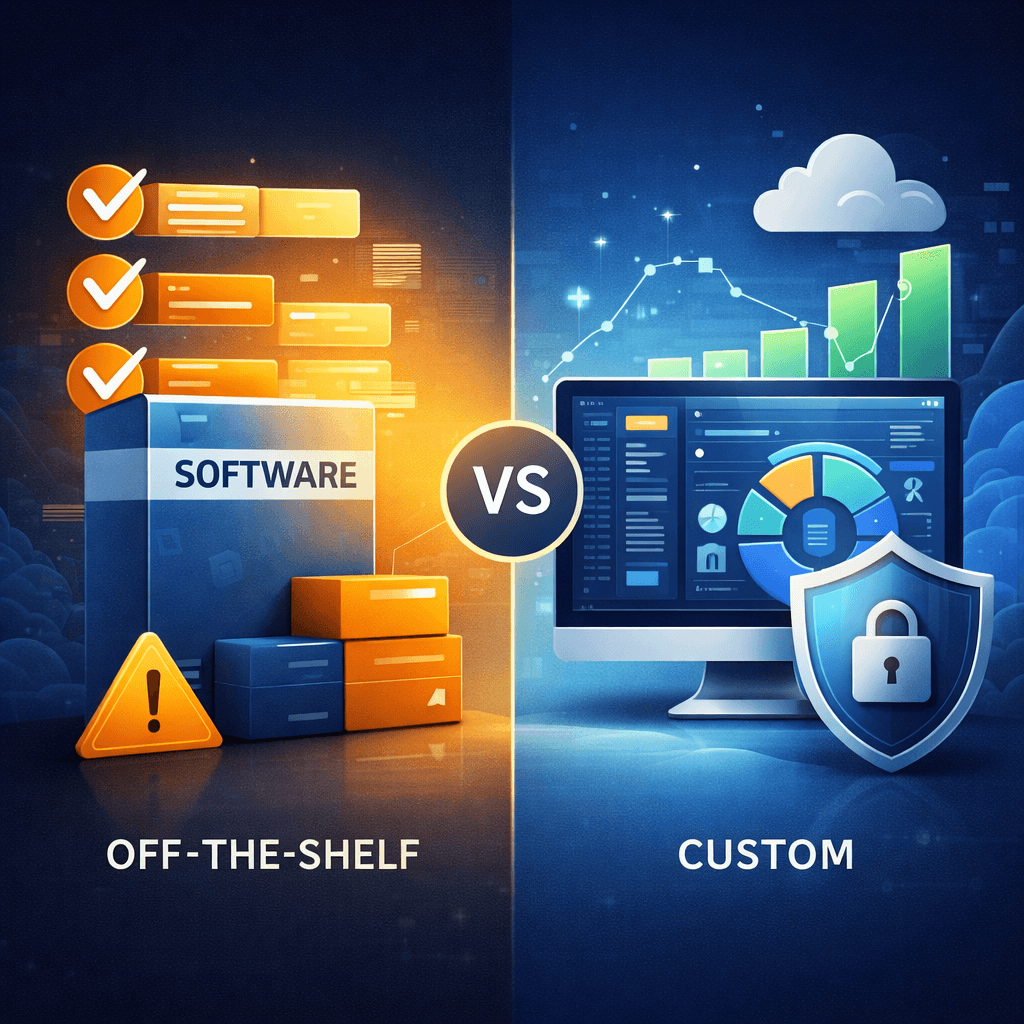
Before diving into the benefits of custom software, let's understand what we're comparing.
Off-the-Shelf Software
Ready-made software products designed for general use across many businesses. Examples include Salesforce for CRM, QuickBooks for accounting, or Shopify for e-commerce.
Characteristics:
- Designed for broad appeal
- Feature-rich but generic
- Quick to deploy
- Subscription or one-time license fees
- Limited customization options
- Vendor controls updates and roadmap
Custom Software
Software built specifically for your business needs, processes, and goals.
Characteristics:
- Designed for your specific requirements
- Includes only what you need
- Longer initial development time
- Upfront development investment
- Unlimited customization potential
- You control the roadmap
Neither approach is universally better—the right choice depends on your specific situation.
Scalability & Flexibility
Tailored software grows alongside business needs. Unlike rigid off-the-shelf solutions, custom software can evolve with your business.
Scaling with Growth
Custom software is designed with your growth trajectory in mind:
- User scaling: Add more users without per-seat licensing costs eating into margins
- Data scaling: Architecture designed to handle your expected data growth
- Feature scaling: Add capabilities as your business evolves
- Geographic scaling: Support for multiple locations, languages, or currencies as you expand
- Integration scaling: Connect with new systems as your technology ecosystem grows
When your business doubles in size, off-the-shelf licensing costs double too. Custom software doesn't have that linear cost relationship with growth.
Adapting to Change
Business requirements change constantly. Custom software adapts:
- Process changes: When you optimize a workflow, your software can change with it
- Market changes: Respond to competitive pressures with new capabilities
- Regulatory changes: Implement compliance requirements without waiting for vendor updates
- Strategic pivots: Support new business models or product lines
- Organizational changes: Reflect new team structures or approval hierarchies
With off-the-shelf software, you're limited by what the vendor decides to build. With custom software, you decide.
Seamless Integration
Custom solutions integrate with your existing technology ecosystem:
- Legacy systems: Connect with older systems that off-the-shelf products don't support
- Industry-specific tools: Integrate with specialized equipment or software in your field
- Custom data sources: Pull data from proprietary systems or unique data formats
- API flexibility: Build exactly the integrations you need, how you need them
- Data flow control: Design information flow to match your actual processes
Integration is often where off-the-shelf solutions fall short—they integrate with popular systems but may not support your specific tools.
Security & Control
Custom solutions provide better data protection and compliance capabilities that off-the-shelf products often can't match.
Complete Security Control
With custom software, you control every aspect of security:
- Security architecture: Design security from the ground up for your risk profile
- Access controls: Implement exactly the permission structures your organization needs
- Encryption standards: Choose encryption methods appropriate for your data sensitivity
- Authentication methods: Support the authentication approaches your organization prefers
- Audit capabilities: Build the audit trails and logging your compliance requires
You're not dependent on a vendor's security decisions or waiting for them to patch vulnerabilities.
Compliance Alignment
Industry-specific compliance requirements are easier to meet:
- Healthcare (HIPAA): Build systems that meet healthcare data protection requirements
- Financial (PCI-DSS, SOX): Implement financial data handling and audit requirements
- Government (FedRAMP): Meet government security standards
- Privacy (GDPR, CCPA): Build privacy controls into the foundation
- Industry-specific: Address specialized compliance needs in your sector
Off-the-shelf software may claim compliance, but custom software can be proven compliant for your specific use case.
Data Ownership
Custom software keeps you in control:
- Data location: Store data where you choose, on infrastructure you control
- Data portability: Export and migrate data freely without vendor lock-in
- Data retention: Implement retention policies that match your requirements
- Data access: No third-party vendor has access to your sensitive data
- Data processing: Control exactly how your data is processed and used
When using SaaS products, your data lives on someone else's servers, subject to their policies and potential access.
Long-Term ROI
While custom software requires higher initial investment, the long-term benefits often outweigh the costs.
Eliminating Ongoing Licensing Fees
Off-the-shelf software typically involves recurring costs:
- Per-user licensing: $50-300+ per user per month adds up quickly
- Feature tiers: Advanced features often require expensive plan upgrades
- Usage limits: Overages for storage, API calls, or transactions
- Annual increases: Vendors regularly increase prices
Custom software has ongoing costs (hosting, maintenance), but these are typically much lower than licensing fees, especially as you scale.
Reducing Operational Inefficiencies
Custom software matches your processes exactly:
- No workarounds: Eliminate inefficient processes required by software limitations
- Automation opportunities: Automate tasks that off-the-shelf products can't handle
- Time savings: Features designed for your workflow are faster to use
- Error reduction: Processes built for your data reduce mistakes
- Training simplicity: Software that matches your mental model is easier to learn
These efficiency gains compound over time, often justifying the initial investment within 2-3 years.
Competitive Advantage Through Unique Capabilities
Custom software can provide capabilities competitors don't have:
- Unique features: Build functionality that differentiates your business
- Process innovation: Implement workflows that give you speed or quality advantages
- Customer experience: Deliver experiences off-the-shelf products can't support
- Data insights: Build analytics tailored to your business questions
- Rapid innovation: Add capabilities faster than competitors waiting on vendor roadmaps
These advantages can translate directly to revenue and market share.
Full Intellectual Property Ownership
When you build custom software, you own it:
- Asset value: Custom software is a business asset that can be valued
- Licensing potential: You could license your software to others in your industry
- Sale value: Software assets increase your company's value in acquisition scenarios
- Control: You decide when to update, modify, or retire the software
- Independence: No vendor can discontinue your software or change terms on you
When to Choose Custom Software
Custom development is ideal in specific scenarios:
Off-the-Shelf Solutions Don't Fit
When you've evaluated available products and none meet your needs:
- Gap analysis shows major missing features
- Required customizations exceed what products support
- Integration requirements can't be met
- Performance requirements exceed product capabilities
- User experience needs can't be addressed
If you'd need to significantly modify your processes to fit the software, custom development may be more appropriate.
Unique Features for Competitive Advantage
When software capabilities directly impact competitive position:
- Customer-facing differentiators: Unique features customers choose you for
- Operational advantages: Process capabilities that improve margins or speed
- Data advantages: Analytics that inform better decisions
- Innovation enablers: Platforms that let you move faster than competitors
If software is a source of competitive advantage in your industry, owning that software makes strategic sense.
Complex Integration Requirements
When your technology ecosystem is complex or unusual:
- Legacy systems that must be integrated
- Industry-specific tools with limited integration support
- Multiple systems requiring complex data flows
- Real-time integration needs
- Custom data formats or protocols
Integration complexity often pushes the balance toward custom development.
Specific Security and Compliance Needs
When standard security isn't sufficient:
- Highly regulated industries
- Sensitive data handling requirements
- Specific audit and reporting needs
- Custom access control requirements
- Data sovereignty concerns
If compliance is complex in your industry, custom software may be easier to prove compliant.
Long-Term Cost of Ownership Matters
When you're planning for the long term:
- Scaling plans that would multiply licensing costs
- Long expected software lifetime (10+ years)
- Desire to eliminate vendor dependency
- Strategic importance of the software
The longer you'll use the software and the more you'll scale, the more attractive custom development economics become.
Considerations Before Choosing Custom Development
Custom development isn't always the right choice. Consider these factors:
Timeline Requirements
Custom software takes time to build—typically 3-12 months for significant applications. If you need a solution immediately, off-the-shelf may be necessary.
Budget Availability
Custom development requires upfront investment. Ensure you have budget not just for initial development but for ongoing maintenance and enhancements.
Internal Capability
You'll need ongoing capability to manage custom software—either internal technical staff or a reliable development partner.
Maintenance Commitment
Custom software requires ongoing maintenance: security updates, bug fixes, and enhancements. Plan for this commitment.
Vendor Reliability
If building custom software, ensure your development partner is reliable for long-term support. D3innovatives is committed to ongoing partnerships with our clients.
The Custom Development Process
Understanding how custom development works helps set expectations:
Discovery Phase
- Understanding your business processes and needs
- Documenting requirements in detail
- Identifying integration points and constraints
- Defining success criteria
- Creating project roadmap
Design Phase
- Architecture design for scalability and security
- User experience design
- Database design
- Integration design
- Technical specification creation
Development Phase
- Iterative development in sprints
- Regular demos and feedback
- Continuous testing
- Documentation development
- Change management
Deployment Phase
- Testing in production-like environments
- Data migration (if applicable)
- User training
- Staged rollout
- Go-live support
Maintenance Phase
- Ongoing monitoring and support
- Security updates
- Bug fixes
- Feature enhancements
- Performance optimization
Choosing a Development Partner
If you decide custom development is right for you, choosing the right partner is critical:
Technical Expertise
- Relevant technology experience
- Team depth and stability
- Quality practices (testing, code review, documentation)
- Security awareness
Communication and Process
- Clear communication practices
- Transparent project management
- Regular status updates
- Responsive to questions and concerns
Partnership Orientation
- Interest in your success, not just project completion
- Long-term support commitment
- Willingness to advise and recommend
- References from satisfied clients
Cultural Fit
- Values alignment
- Working style compatibility
- Trust and rapport
- Accessibility
D3innovatives brings all of these qualities to our custom software partnerships.
Conclusion
Custom software is a strategic long-term investment. The decision to build custom software shouldn't be taken lightly—it requires significant investment and commitment. But for the right situations, custom development delivers benefits that off-the-shelf products simply can't match: perfect fit to your needs, scalability without ballooning costs, competitive advantages, and complete control.
D3innovatives helps businesses in Perinthalmanna and across Kerala make informed decisions about their software needs, delivering solutions that drive real business value. Whether you're exploring custom development for the first time or ready to start a project, we're here to help you navigate this important decision.
Contact us to discuss your software needs and explore whether custom development is the right choice for your business.